
IAQM-compliant assessments covering demolition, cut-and-fill, construction and trackout phases. We identify sensitive receptors using GIS mapping and provide proportionate, workable mitigation strategies that satisfy local authority requirements first time.
A construction dust risk assessment (formally an Air Quality and Dust Risk Assessment, or AQDRA) evaluates the potential for a construction project to generate dust that could adversely affect human health or the natural environment. It is required by most local planning authorities as a planning condition or as part of a Construction Environmental Management Plan (CEMP). Viridian Air prepares all assessments in accordance with the IAQM and Environmental Protection UK (EPUK) guidance document Guidance on the Assessment of Dust from Demolition and Construction (2014), which is the standard methodology recognised by local planning authorities across the UK.
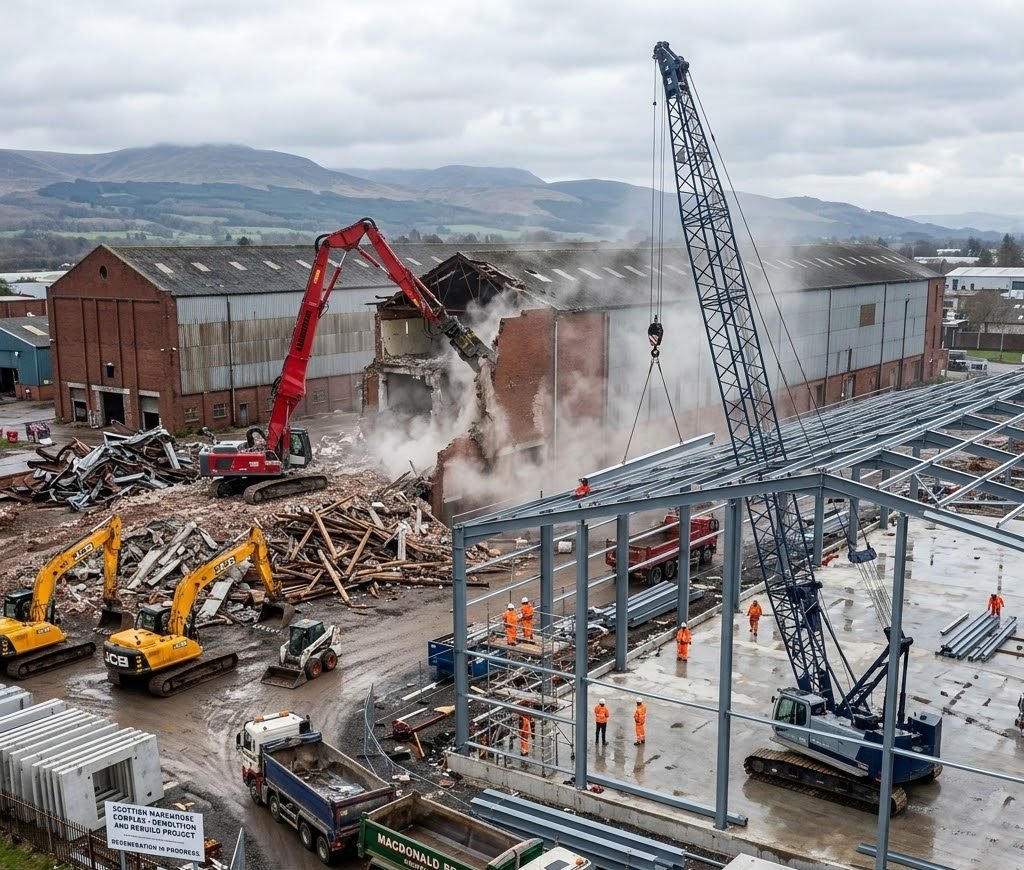
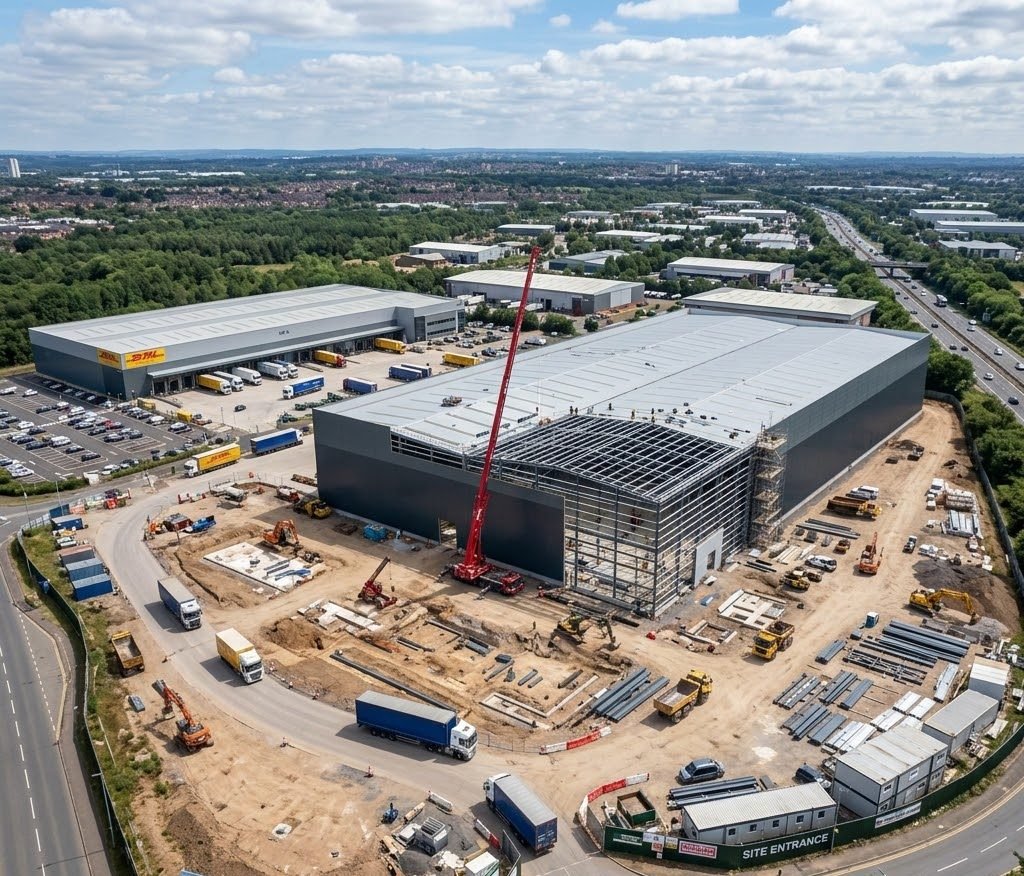
When is an AQDRA required? Most local planning authorities require a dust risk assessment for any development involving demolition, significant earthworks or construction activity within 350 m of a sensitive receptor (dwellings, schools, hospitals, ecological sites). We can advise quickly on whether your scheme requires one.
We follow the IAQM four-stage methodology, providing a proportionate and evidence-based assessment that is straightforward for planning officers to evaluate.
Sensitivity of the site and surrounds We identify and classify all sensitive receptors within the appropriate buffer distances (20, 50, 100, 200, 350 and 500 m) using GIS mapping. Receptor sensitivity is assigned based on land use and the proximity of ecological designations.
Emissions from each activity phase — demolition, earthworks, construction and trackout — are classified by magnitude using the IAQM lookup tables, taking into account site area, soil type, construction duration and proximity to receptors.
The combined sensitivity and magnitude ratings generate a risk level for each phase and receptor combination. This determines whether mitigation is required and at what level of stringency.
Where medium or high risk is identified, we develop a proportionate emission mitigation plan specifying practical dust suppression, wheel-wash, haul route management and monitoring measures. These are written as enforceable site management requirements suitable for inclusion in the CEMP.

Impact and neutrality assessments for residential, commercial and industrial planning applic
Bespoke operational and construction mitigation strategies aligned with IAQM guidance and local authority requirements.
HSE Workplace Exposure Limit compliance monitoring for dust, PM10, PM2.5, CO₂ and VOCs.
A full AQDRA includes: a site description and construction programme summary; identification and classification of sensitive receptors using GIS; dust emission magnitude assessment for each construction phase; a risk matrix combining sensitivity and magnitude; and an emission mitigation plan with specific dust control measures. We also provide GIS-generated receptor maps which planning officers find particularly useful.
Not every application requires a full AQDRA, but most developments involving demolition, significant earthworks or construction near residential or sensitive land uses will need one. A brief screening assessment is often sufficient for smaller schemes to demonstrate that risks are low and standard good-practice measures are sufficient. We provide screening assessments as a rapid, cost-effective first step.
Yes. The emission mitigation plan is typically produced as an integral part of the AQDRA. Where a client requires a standalone Dust Management Plan or Construction Air Quality Management Plan for inclusion in a CEMP, we produce this as a separate, site-specific document that can be adopted by the site contractor.
A straightforward AQDRA for a single-phase residential development typically takes 1–2 weeks from instruction. Larger multi-phase schemes or sites with complex receptor environments may take 2–4 weeks. We work to your programme and can accommodate urgent turnaround where required.
Tell us about your scheme and we will confirm requirements and provide a fixed-fee quotation within 24 hours.

Specialist air quality consultants for planning applications and workplace compliance across the UK. From initial scoping to submission-ready reports, we work closely with clients and local authorities to ensure a fast, smooth approval process.