
Rigorous, Defra, EPUK, IAQM and GLA compliant impact and neutrality assessments from initial screening through to full Environmental Impact Assessment. We liaise directly with local authority air quality officers to ensure smooth, first-time approval.
An air quality assessment evaluates the potential impact of a proposed development on local air quality — both during construction and once operational. It is required by most local planning authorities where a development is located within or adjacent to an Air Quality Management Area (AQMA), or where the development itself may generate significant traffic or dust emissions.
Viridian Air follows the Technical Guidance LAQM.TG(22) published by Defra, along with IAQM and Environmental Protection UK (EPUK) best practice guidance. For London developments, we also comply with the Greater London Authority's Air Quality Neutral and Air Quality Positive guidance aligned with London Plan Policy SI1.
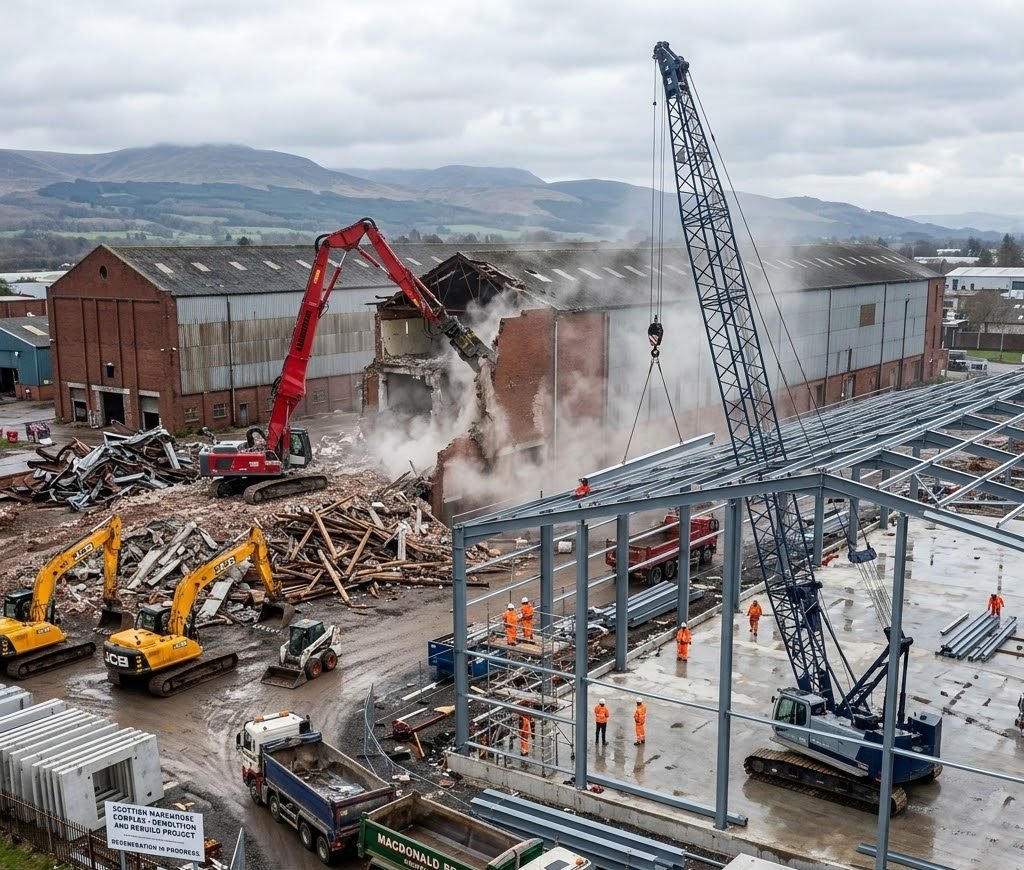
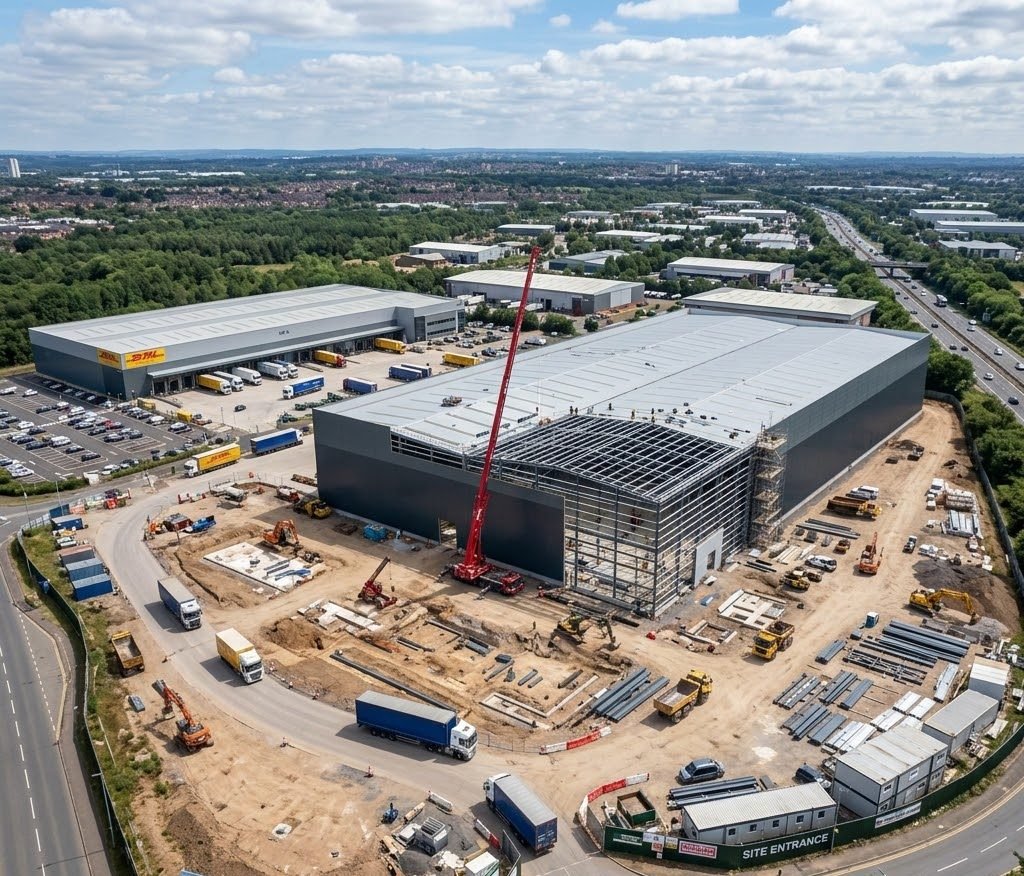
Do you need an air quality assessment? If your development is within 200 m of a busy road, within or adjacent to an AQMA, involves demolition or earthworks, or will generate new vehicle trips, it is likely that your local planning authority will require one. We can provide a rapid no-obligation screening assessment to confirm whether a full report is needed.
All major development in Greater London must demonstrate air quality neutrality under the Mayor’s London Plan (Policy SI1). Viridian Air prepares Air Quality Neutral Statements covering both building emissions and transport emissions benchmarks, assessed against the GLA’s updated 2023 guidance thresholds for NOx and PM2.5.
We have experience working with London boroughs across a range of development typologies including Build to Rent, mixed commercial and retail, and transport interchange schemes.
We follow a proportionate, evidence-led approach tailored to the scale and sensitivity of each project. Our work is grounded in meteorological and atmospheric science and informed by ongoing policy engagement at national level.
We establish local background concentrations using Defra background maps and existing local authority monitoring data. Where on-site monitoring is required, we deploy calibrated instruments over an appropriate period and apply quality-assured data capture and analysis.
All relevant sensitive receptors — dwellings, schools, hospitals, ecological designations — are identified and classified by sensitivity. Where the development is in London, GLA Air Quality Focus Areas are also recorded.
Operational impacts are assessed using commercial (AERMOD or similar) or DMRB screening tools depending on project scale. We model NO₂, PM10 and PM2.5 concentrations at sensitive receptors and compare against National Ambient Air Quality Objectives (NAAQOs) and WHO guidelines.
Predicted changes in concentration are assessed for significance using the IAQM/EPUK methodology, considering both the magnitude of change and the existing air quality sensitivity of the area. Results are presented clearly in tabular and mapped form.
Where significant effects are predicted, proportionate mitigation measures are developed in collaboration with the client and design team. The final report is written to meet the local planning authority's specific requirements and is formatted for direct inclusion in the planning application submission.

IAQM-compliant AQDRA for demolition, construction and trackout phases with GIS-mapped receptor buffers.
Bespoke mitigation strategies for construction and operational phases, developed in consultation with the client and local authority.
London Plan Policy SI1 compliant statements. Building and transport emission benchmarks for NOx and PM2.5.
Local planning authorities require an air quality assessment when a development is located within or adjacent to an AQMA; when the development will generate significant new vehicle trips; when the development involves demolition, earthworks or other dust-generating activities; or when the site is near a sensitive receptor such as a school or hospital. Many authorities also require assessments for developments with combustion plant (boilers, CHP) above certain thresholds. We provide a rapid screening assessment to confirm requirements for your specific site.
A straightforward screening assessment or DMRB air quality assessment for a smaller development can typically be completed within 1–2 weeks of instruction. A full impact assessment including dispersion modelling for a major planning application usually takes 3–4 weeks, depending on site complexity and data availability. Where on-site monitoring is required, additional lead time of 4–6 weeks is needed to collect a representative dataset. We discuss timescales at the outset and work to the needs of your programme.
An air quality neutral assessment (required under London Plan Policy SI1) demonstrates that a development will not worsen local air quality relative to the baseline. It assesses building and transport emissions against GLA benchmarks. An air quality positive assessment goes further, demonstrating a net improvement to air quality through design or operational measures. While air quality positive is not a mandatory requirement, it is increasingly sought by London boroughs as a material planning consideration, particularly for major schemes in Air Quality Focus Areas.
We use AERMOD (or similar) model for detailed Gaussian plume road traffic dispersion modelling, DMRB (Design Manual for Roads and Bridges) screening tools for smaller schemes, and AERMOD for industrial source assessments where required. For combustion plant, we apply Defra's atmospheric dispersion modelling guidance alongside fuel type and stack parameters. All modelling is quality-assured and documented in accordance with IAQM/EPUK guidance.
Cost depends on the type and scope of assessment required, development size, sensitivity of the area, and whether on-site monitoring is needed. A straightforward screening assessment for a modest residential development typically starts from around £625–£850 plus VAT. A detailed dispersion modelling study for a major mixed-use scheme will be proportionately more. We provide a detailed, fixed-fee quotation for every project following an initial scoping call at no charge — contact us to discuss your scheme.
Tell us about your scheme and we will confirm within 24 hours whether an assessment is required and provide a fixed-fee quotation.

Specialist air quality consultants for planning applications and workplace compliance across the UK. From initial scoping to submission-ready reports, we work closely with clients and local authorities to ensure a fast, smooth approval process.